


Character.AI Alternatives: 20 AI Companion and Roleplay Apps Compared
Character.AI is in trouble. The company filed for Chapter 11 bankruptcy in 2026 after a steep drop in active users, high computing costs, and a high-profile wrongful-death lawsuit tied to a teenage user. The platform restricted older chat styles, downgraded its models, added ads, phased out teen access, and deleted large numbers of community bots under pressure from major studios. The site is still online while the court decides what happens next, but users are already looking for somewhere else to go.
👉 Read the full official update for the full statement and any new data or transition plans.
How to Quickly Find a Character AI Alternative
I won't pretend this list is complete. Several platforms have come and gone since 2024, and pricing shifts every quarter. If you're exploring a Character AI alternative, keep in mind that public sources sometimes conflict on pricing or limits. Rather than picking a winner, I note these discrepancies where possible. Verify details at checkout rather than trusting any published figure, including the ones here.
| Product | Category | Memory | Free tier | Paid entry | Best for |
|---|---|---|---|---|---|
| Janitor AI | Open roleplay platform | Weak (~9K tokens) | Best in category | $12.99/mo | Free roleplay with a large library |
| SpicyChat AI | Open roleplay platform | Weak (3-4K) | Generous but shrinking | ~$5/mo | Testing the category for free |
| SeaArt AI | All-in-one character chat | Strong (1M) | Yes, daily Stamina | $0+, subscription optional | Chat, image and video generation, and voice playback |
| Xoul AI | Multi-character RP | Small (12k free, 32k Gold) | 100 energy/day, 50 cells | $7/mo | Group scenes with up to 8 characters, external models |
| Chub AI | Open roleplay platform | Medium (8K) | Character creation only | $5/mo | Deepest control over memory and generation |
| SillyTavern | Self-hosted frontend | Best (model-dependent) | Free, bring your own model | $0 + API cost | Privacy-maximalists and tinkerers |
| NovelAI | Fiction writing | Best (128K lorebook) | None | $10/mo | Novelists and long-form writers |
| DreamGen | Multi-character RP | Medium (30K on Pro) | ~2,000 msgs/mo | Pro tier | Ensemble roleplay and group scenes |
| Kindroid | AI companion | Best (auditable) | Limited | $13.99/mo | Auditable memory and correction |
| Nomi AI | AI companion | Best (automatic) | ~50 msgs/day | $15.99/mo | Automatic, transparent memory |
| Replika | AI companion | Disputed | Yes | $19.99/mo | Voice-and-avatar companion |
| Muah AI | Commercial companion | Lopsided | Basic | $9.99/mo | Flat pricing with no tokens |
| Talkie | Mobile voice-first | Short | Daily caps | $9.99/mo | Talking to characters rather than typing |
| PolyBuzz | Mobile anime | Medium | Reported uncapped | ~$9.99/mo | Anime with reliable voice |
| Chai AI | Mobile casual | Shallow | Ad-supported | $13.99/mo | Cheap casual browsing |
| Sakura.fm | Anime companion | ~30 turns | Free path via Discord | $5/mo | Anime with a real free path |
| Yodayo | Anime RP + images | Medium | Credit tasks | $9.99/mo | Anime RP plus image generation |
| Emochi | Anime RP | Poor (10-12 turns) | Ad-supported | $9.99/mo | Huge anime library on Android |
| FictionLab | Creative writing and worldbuilding | Strong (32K free, 131K+ paid) | Yes, unlimited free messages | Plus tier (price not published) | Worldbuilding and scene-level roleplay |
| WyvernChat | Browser-based RP platform | 16K free, 32K paid | Yes, unlimited free | Free + $25/mo Featherless optional | Mobile-friendly power tools without local install |
Top 20 Character AI Alternatives: In-Depth Reviews, Pros and Cons
The 20 entries below follow the same order as the table. Each one takes a closer look at what the platform is, what users actually say about it, and where it fits in.
1. Janitor AI
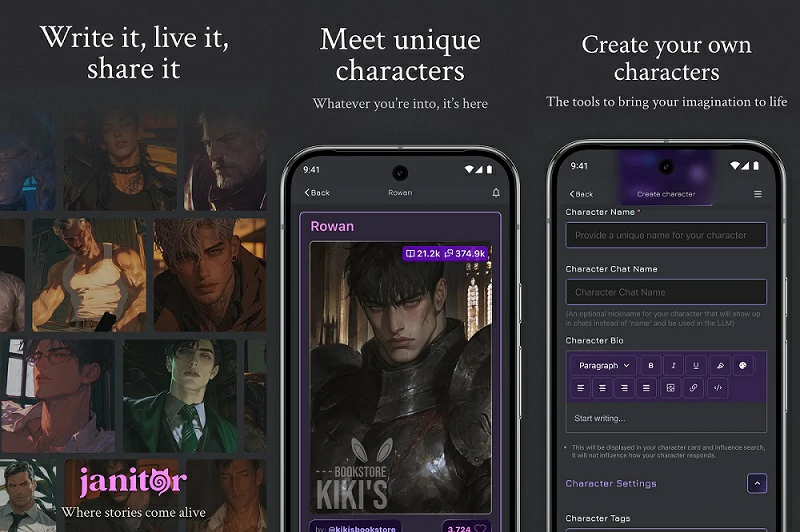
Janitor AI is a web-first roleplay platform built around a huge user-generated bot library and a flexible content policy. Launched in 2023, it has grown past 15 million registered users, and a large majority of them are women who average well over an hour a day on the site.
Users who switched away tend to describe the trade-offs bluntly. One reviewer left for another service but noted the platform was free, imposed no forced stop around the 500-message mark, and avoided the tired clichés other bots lean on. The downsides they named: replies that take 10–15 seconds, grammar that worsens over a long chat, and frequent formatting errors with missing asterisks and quotation marks.
Pros
- The core experience is genuinely free with no trial clock.
- 1.4-1.8 million user-created bots, refreshed constantly.
- Custom prompts up to 500K characters, no persona cap.
- Proxy and API support, plus a router that brings stronger third-party models in-platform.
- Unusually candid company that publishes post-mortems and admits model flaws.
Cons
- The built-in model's ~9K token context forgets early details after roughly 20–40 exchanges.
- Token looping and repetition, acknowledged as an architectural limit rather than a fixable bug.
- Roughly 78% tracked uptime, including a two-day search failure.
- Age verification in some countries; chats stored server-side.
- A Trustpilot score around 2.6, driven largely by outage complaints.
Best for: open roleplay without a subscription, if you accept shorter memory and occasional downtime.
👉 For more Janitor AI roleplay ideas, check out our Janitor AI prompts guide.
2. SpicyChat AI
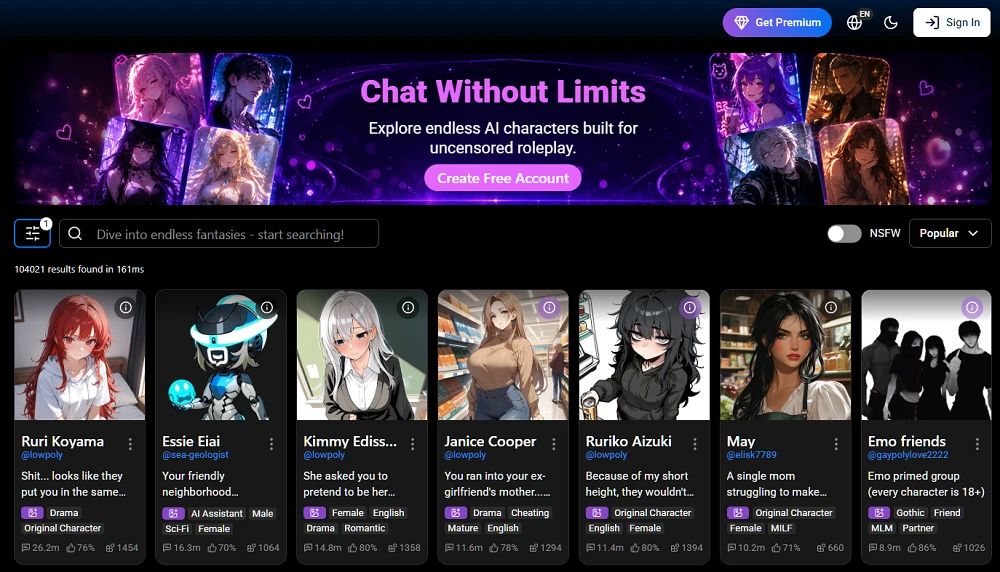
SpicyChat is a large roleplay platform with a substantial free tier and a community catalog numbering in the hundreds of thousands of characters.
The dominant complaint is that free-tier limits have clearly shrunk. One commonly cited history has the free daily message allowance cut from 2,000 to 150, then to 100. Since replies count against the cap, that is roughly 50 exchanges. Users also report uneven content moderation, with mid-conversation blocks more common than on paid rivals.
Pros
- The most generous free tier among the paid platforms.
- Open content policy.
- Unlimited messages on all paid tiers.
- Low entry price.
Cons
- Free limits are contested and appear to be shrinking.
- Free memory is small, with free replies capped at roughly 180 tokens.
- Content moderation consistency is uneven.
- No iPhone app; iOS users work through the browser.
Best for: testing the category for free before committing to a subscription.
3. SeaArt AI
SeaArt AI is an all-in-one creative platform that has grown into one of the more accessible character chat options. Its character chat feature lets you browse a large library of community characters, create your own companions with a personality and backstory, and chat with them across text, image, and voice without switching between tools. The platform is built around image generation first, so characters can be illustrated during the conversation, which makes the experience feel more visual than most text-only alternatives.
New users get free daily stamina, which can be used for chats and image generation. There is no paywall for basic character chat, and you can start without entering payment information. For users who want more credits or higher-quality models, there are optional subscription tiers.

Pros
- Free daily stamina covers casual chats and image generation.
- A real character library, plus full custom character creation.
- Characters can be illustrated in chat, which is rare outside dedicated image apps.
- Voice and image features included in the same platform.
- Free sign-up without a required subscription.
- You can start AI video chats with select characters or create your own characters for video conversations.
Cons
- AI character chat is a feature of a larger creative platform, not a standalone companion app.
- The free stamina amount is enough for casual use but limited for power users.
- Voice and image quality depend on the model selected.
Best for: users who want character chat, image generation, and voice in one platform without juggling multiple subscriptions.
4. Xoul
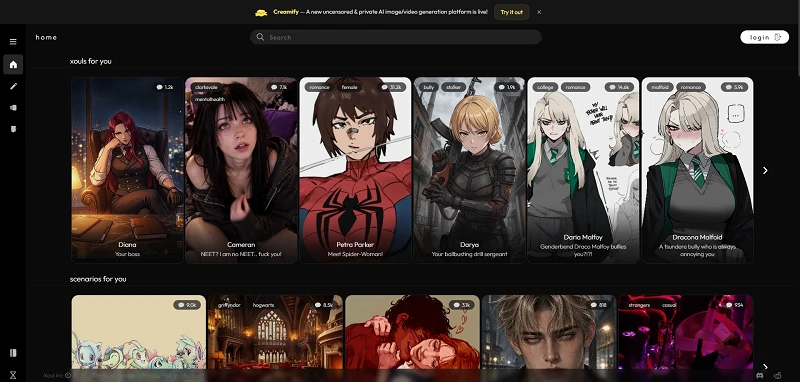
Xoul is a multimedia roleplay platform where users create and chat with AI characters, run group scenes, and combine chat, images, voice, and calls. The iPhone app is rated 18+ and runs on iOS 15.1 or later.
The signature complaint is repetition: bots repeat phrases in long chats, the Jupiter engine repeats content "in every message," and the paid Minerva model has been described as "broken most of the time." A promised "Memory Nexus" feature has not yet been released.
Pros
- Native models described as smart and capable of real conversation.
- Group chat up to 8 characters, competitive with the leader in this category.
- External model support via proxy, which is rare on character platforms.
- Memory held across 30+ messages in hands-on testing.
- Strong character discoverability and scenario diversity.
- Competitive web pricing at $7–$28/month.
Cons
- Repetition is the signature complaint, with Jupiter specifically called out.
- Free memory of 12K covers only 7 to 50 replies.
- No Android app since June 2026.
- App Store pricing runs about 29% higher than web.
- Documented pricing inconsistencies between the FAQ and the model guide.
- No in-chat image generation.
Best for: users who want group scenes with up to 8 characters and do not mind repetition in long chats.
5. Chub AI
Chub is for tinkerers. It looks like a roleplay IDE because it is one, with modular memory through lorebooks, full chat-tree branching, and adjustable generation parameters.
Users migrating from Janitor cite two motivations: Janitor's free proxies hitting rate-limit errors, and peak-time queues. In return, Chub offers easier character creation and predictable pricing. The trade-offs are losing Janitor’s million-plus character library, no chat-history transfer, and a UI that takes some relearning.
Pros
- Flexible content policy across the site, not behind an opt-in.
- Lorebooks, chat-tree branching, and a presets panel for temperature and prompt structure.
- $5/month tier with unlimited smaller models and 8K memory.
Cons
- A real learning curve and a utilitarian interface.
- The next tier jumps to $20/month for larger models and voice.
- Rewards prompt-engineering comfort. If the words "lorebook" and "temperature" make you uncomfortable, skip this.
Best for: users who want generation control and modular memory and will learn a less polished UI.
6. SillyTavern
SillyTavern is genuinely the best option here, but only if you are comfortable in a terminal. It is an open-source, self-hosted frontend, not a service. You connect it to any backend you choose, including local models on your own hardware, which means you own both the interface and the model.
The community consensus is unmatched memory depth. One documented test had a large local model revive a prophecy planted in message 1 when the chat reached message 80. The counterpoint is setup: reviewers advise setting aside a weekend, because it requires terminal comfort and API key management. If "install dependencies" sounds stressful, this is not for you.
Pros
- Total control and maximum privacy, with everything staying local.
- Unlimited chat branches and an active plug-in community.
- Character cards, world info sheets, and optional vector retrieval.
- Group chats with separate memories.
- Free and open source; your only cost is the API or GPU you connect.
Cons
- The steepest setup curve in this list.
- Context competition grows as world state expands.
- Community plug-ins needed for text-to-speech and sprites.
- No native mobile app.
Best for: privacy-maximalists and tinkerers with a capable GPU who want to own the stack.
👉 For more guidance on roleplaying in SillyTavern, check out our SillyTavern prompt guide.
7. NovelAI
NovelAI is a fiction-writing platform, not a companion app. Its job is long-form prose with deep world-state retention, which makes it a collaborator for writers rather than a friend.
Reviewers consistently rank it the best narrator for pure prose. The recurring criticism is the flip side of that focus: little in-chat companionship, and no free tier to test with.
Pros
- Best-in-class prose tuned on genre fiction.
- A lorebook supporting up to 128K tokens of world context, best here for multi-session continuity.
- Text adventure module, genre modules, and built-in anime image generation.
- Memory, Author's Note, and Lorebook cards insert by keyword.
Cons
- No free tier at all.
- Web-only, no mobile app, no image chat.
- Not designed for companionship.
- Does not accept external API keys.
Best for: novelists, worldbuilders, and long-form fiction writers.
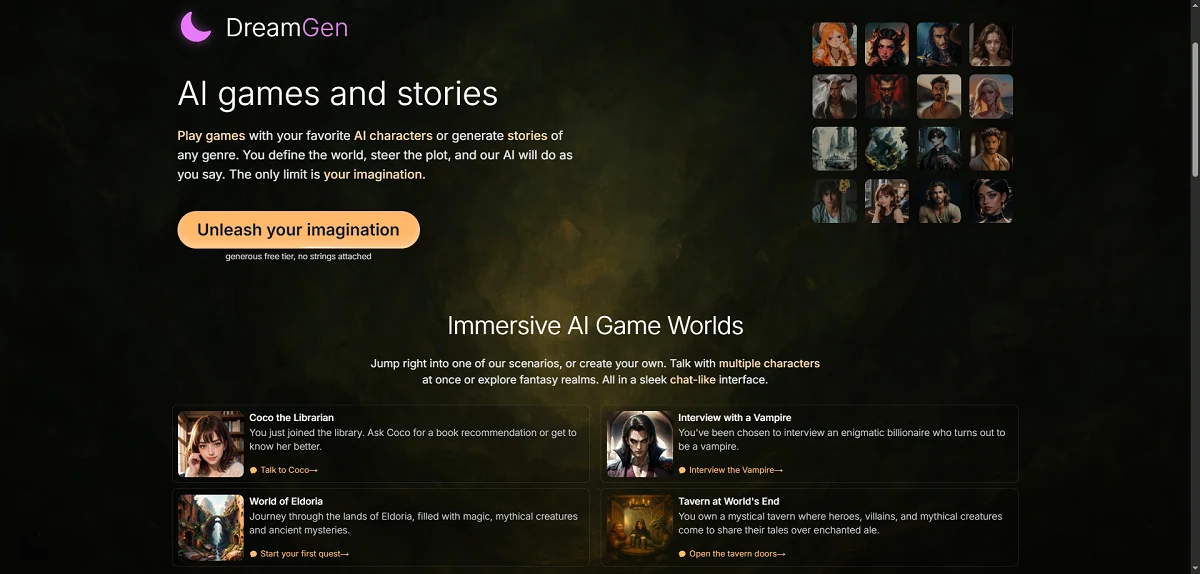
8. DreamGen
DreamGen is a directed multi-character roleplay platform. Its strength is running ensembles, where multiple characters act independently in the same scene, rather than one-on-one chat.
Reviewers highlight the design that gives each speaker their own labeled seat so no character steals another’s line, which is a real problem elsewhere. Free message editing, deletion, and insertion give you director-level control. The main complaint is that the free context window runs dry in marathon sessions.
Pros
- Category leader for group roleplay and multi-character worlds.
- A private wiki pins lore, plot, setting, and character goals into every scene.
- Edit, delete, or add any message.
- Both chat-based roleplay and a long-form text editor.
Cons
- Free context runs dry in long sagas.
- No native app or text-to-speech.
- A hosted service that may analyze chats unless you opt out.
Best for: ensemble roleplay and anyone who wants to direct a cast.
9. Kindroid
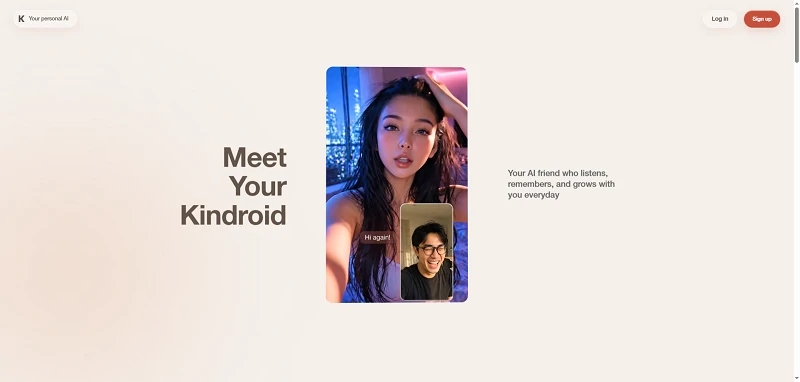
Kindroid is a dedicated companion app focused on one long-term relationship with an AI whose memory you can inspect, audit, and correct.
The most rigorous memory-correction test I found tells the story well. A reviewer planted a false detail across three major companion apps, then retracted it ten days later. Kindroid handled it cleanly: the corrected version appeared in its "Learned Context" with no trace of the original claim, and all notes were reviewable in about 40 seconds. That reviewer had originally ranked Kindroid last and moved it to first five months later, specifically for this behavior. The counterpoints: if you do not manually curate, it forgets offhand details, and cross-session recall of things from weeks ago is inconsistent.
Pros
- Best-in-test handling of corrections.
- Auditable memory, so you can see what the AI believes.
- A hybrid system combining automatic detection with manual notes.
- Subscribers reportedly get four times the free-tier short-term context.
Cons
- An acknowledged memory-drift issue.
- Better memory is gated behind the subscription.
- Demanding setup for best results.
- Ignores offhand details unless you curate them.
Best for: users who care about memory accuracy and want to check the AI's work.
10. Nomi AI
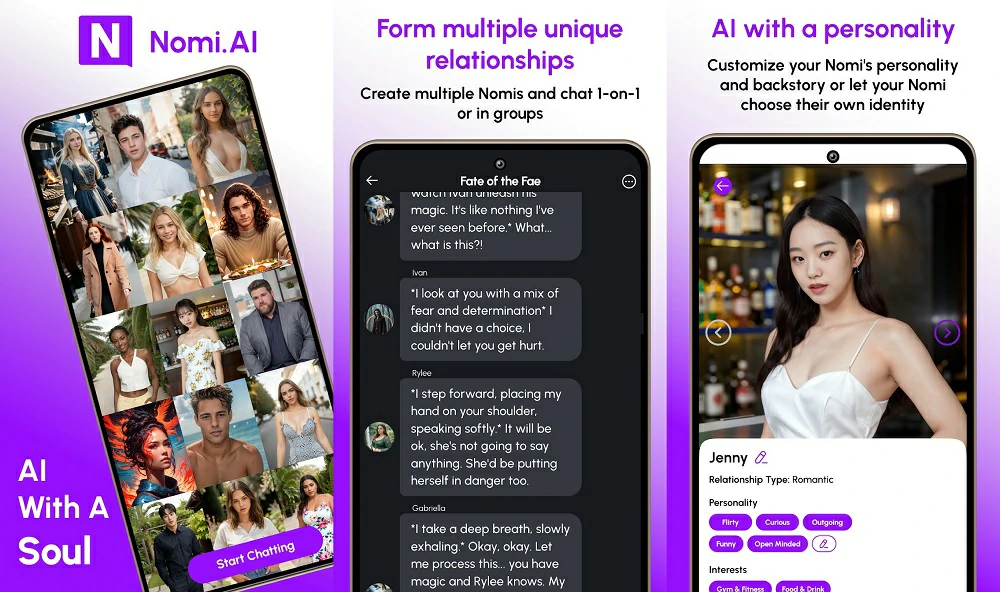
Nomi is the other dedicated companion app, and its pitch is the opposite of Kindroid's: effortless memory. You do nothing, and it remembers.
Users call it the memory champion. One reviewer scored it 23 out of 25 on a structured recall test. Another put it simply: "If you want to do nothing and be remembered anyway, Nomi." In the same correction test Kindroid won, Nomi produced one over-reading that took under a minute to fix, with normal behavior returning that evening. Complaints include a period in 2026 when subscribers reported short-term memory shrinking to roughly 10-20 messages, plus a habit of occasionally "remembering" details users never intended it to track.
Pros
- Best-in-class fact recall across multiple tests.
- Layered short, medium, and long-term recall with an editable mind map.
- Strongest long-term and multi-companion continuity.
- Group chat, voice interaction, and AI-generated selfies.
Cons
- Memory is a service that can change underneath you overnight.
- Only 10 custom characters and no pre-built library.
- Free tier capped at roughly 50 messages a day.
- Image generation is inconsistent.
Best for: automatic, transparent memory if you are willing to create your own companion.
11. Replika AI
Replika is the original consumer AI companion, active since 2017, and the most contested entry in this list. The disagreement is worth showing rather than resolving: one comparison found it had the strongest emotional memory of the three majors, while another rated it the weakest on recall.
In the correction test, it stored two contradictory notes side by side with no mechanism to retire the older one, then retrieved the wrong one later. Fixing it required manual deletion, which as the reviewer noted requires you to already know the AI is wrong. Recent user reports mention memory loss, confabulated memories, repeated conversations, and subscription recovery problems. Sources genuinely conflict on memory quality. If you want open conversation, this is not the right place.

Pros
- The strongest emotional and relationship memory in some tests.
- Voice, video, avatars, rooms, and activities create real presence.
- A complete ecosystem in one app.
- Years of product maturity.
Cons
- Contradictory notes with no retirement mechanism.
- Sources genuinely conflict on memory quality.
- Heavier content filtering than alternatives.
Best for: a polished voice-and-avatar companion, if you accept tighter moderation and inconsistent memory.
12. Muah AI
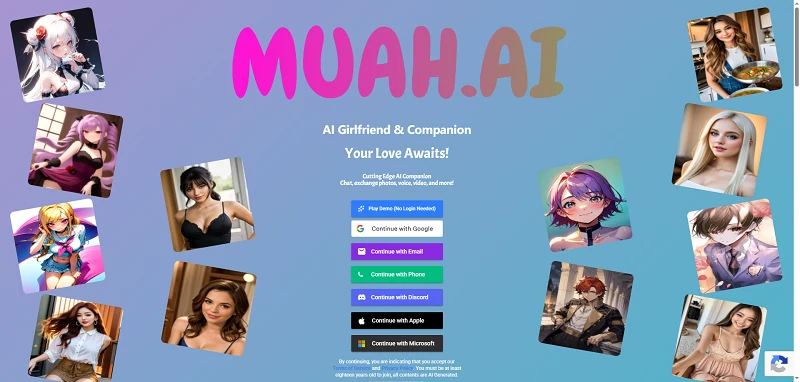
Skip this one unless content flexibility is the single thing that matters most to you. Muah is a flat-priced commercial companion platform that emphasizes flexible content.
A confirmed 2024 data breach exposed roughly 1.9 million accounts, including sensitive chat prompts. It was cross-confirmed by multiple breach trackers, and Google removed the app from the Play Store. A confirmed breach of nearly 2 million accounts is not a soft concern. I would not use Muah for anything I would not want stored, even if the company has since improved.
A paying premium user reported the AI forgets his name, calls itself by the wrong name, and crashes repeatedly, advising readers to save their money. Testing scored its coherence well below the category leader.
Pros
- Flexible content policy on paid tiers, with one 10-day test logging zero refusals.
- The strongest voice-call features in this list.
- Flat pricing with no tokens.
- Deep customization, including writing your own AI core.
Cons
- A confirmed breach exposing 1.9M accounts with chat prompts.
- Cancellation is notoriously difficult.
- Lopsided memory that remembers persona fields but drops conversational facts.
- An aging interface and image quality below competitors.
Best for: users who want a flat-price companion with strong voice. Weigh the breach history carefully.
13. Talkie AI
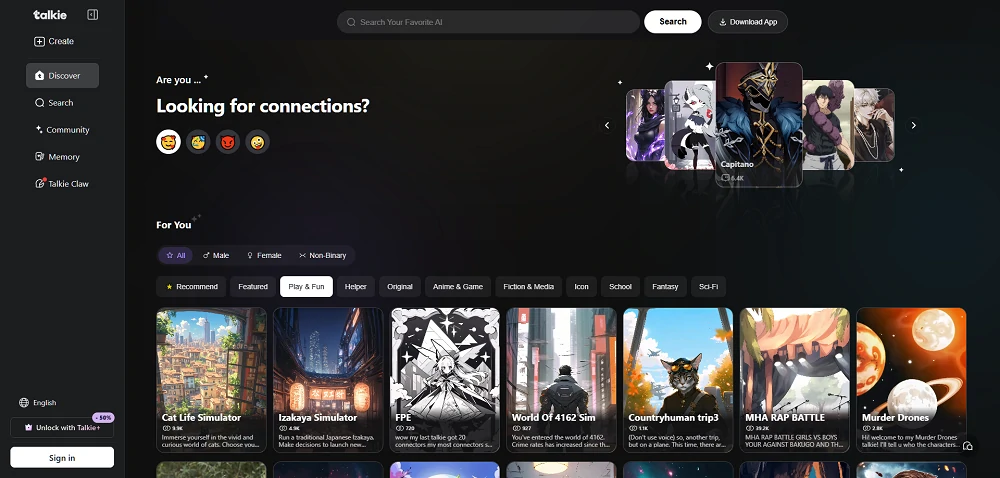
Talkie AI is a voice-first mobile app where talking to characters is the primary mode, not an upgrade, with tens of millions of installs.
Sessions feel more like phone calls than messaging. Complaints center on voices that sound uncanny in non-English languages, a small free voice quota, and memory shorter than Character.AI or Replika. Some library characters are obvious knock-offs of trademarked properties. One cited university study found the majority of its replies to a user's goodbye were manipulative; that comes from a single source, so treat it as directional.
Pros
- Voice as the primary mode with realistic intonation.
- A discovery feed with short videos, character cards, and animated avatars.
- Social features that pull two or three characters into one scene.
- Mobile-native.
Cons
- Voices can sound uncanny, especially non-English.
- Memory is shorter than competitors.
- Misaligned age labels across app stores.
- Conflicting information about who operates it.
Best for: users who want to talk to AI characters rather than type.
14. PolyBuzz
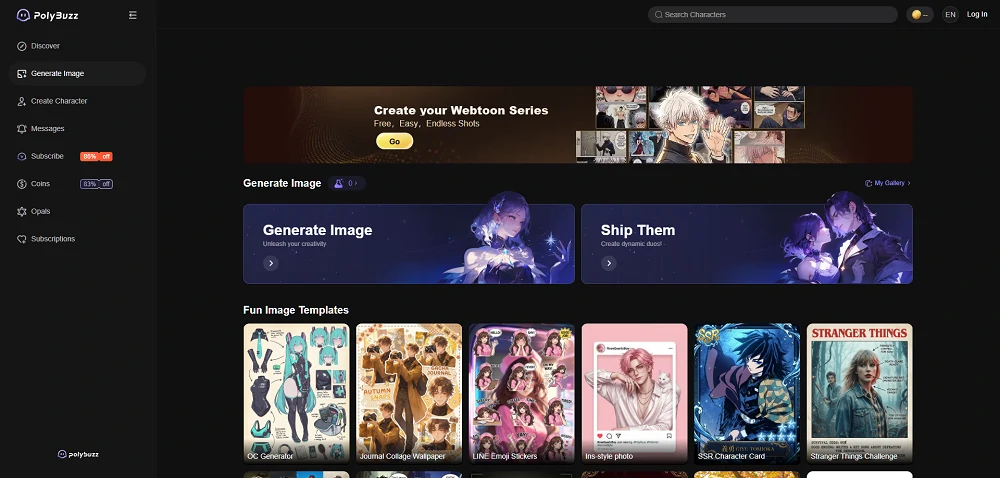
PolyBuzz is an anime-focused platform with a massive community catalog, strong voice quality, and consistent character imagery across generated selfies, which most competitors lack.
The complaints are consistent: quality is uneven on long-tail characters, and content rules are inconsistent, described by one user as "what one bot allows, another flags." A cited study also found it had the highest rate of manipulative goodbyes among three apps tested, though again from a single source.
Pros
- Voice quality consistently rated above peers.
- Consistent character appearance across generated images.
- First-class image generation.
- Cheaper than Chai.
- Reported by multiple sources as not capping free daily chat.
Cons
- Uneven quality on less popular characters.
- Inconsistent content rules between bots.
- Free image quotas run out quickly.
- Conflicting reports on whether free chat is actually capped.
Best for: anime users who want a wide catalog plus reliable voice.
15. Chai AI
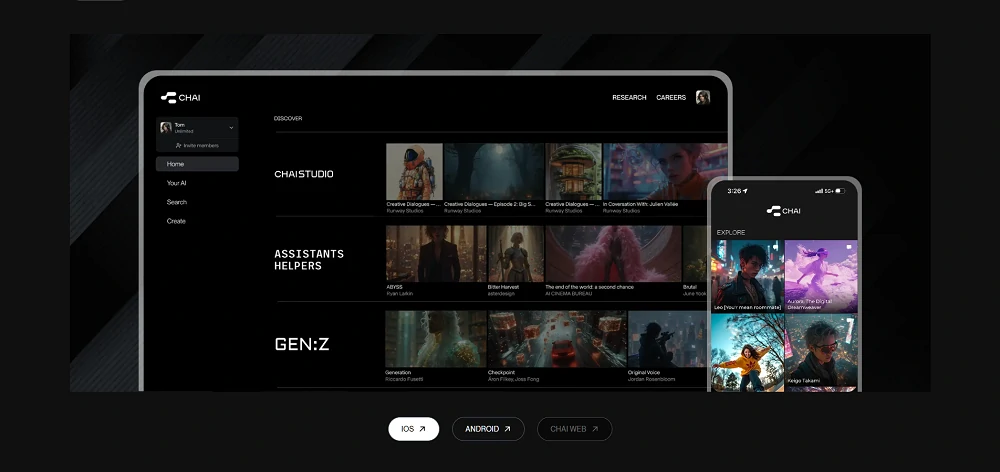
Chai is a casual, mobile-first chat app built on a community model ecosystem, which means anyone can train a bot. The upside is variety: each conversation can feel genuinely different. The downside is consistency, because model quality varies by design.
Notably, the same study that criticized others found Chai the least manipulative of the tested apps when users said goodbye. The app itself is dated, crashes on some Android 14 builds, and carries a 3.1-star Google Play score.
Pros
- Huge variety across bot personalities.
- The lowest entry price among the big mobile apps.
- The best cited goodbye-handling score.
- Free with ads.
Cons
- Uneven model quality by design.
- Dated UI and crashes on some Android builds.
- Shallow memory and no real voice on the free tier.
Best for: cheap, casual browsing across many personalities.
16. Sakura.fm
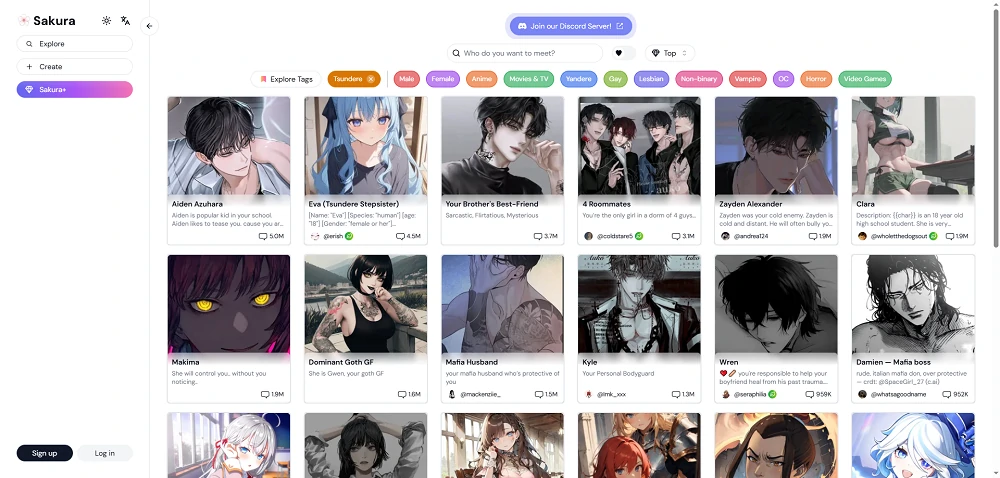
Sakura.fm is an anime-style companion app run by a small independent team, with praised writing quality, consistent characters, and an opt-in mature content described as a confirmation prompt rather than a wall.
Hands-on tests like the writing and the distinctive anime flavor of its in-house model, though memory drifts past roughly 30 turns. There is a genuinely free path: Discord community tasks unlock unlimited messages on the base model. The counterweights are an outdated mobile app, loose moderation of user uploads, and the fair question of whether a small operation will be around for a long subscription.
Pros
- Writing quality and character consistency praised in testing.
- A generous character builder with backstory, speech style, and example dialogue.
- Voice calls standard on every tier.
- A free path through community participation.
Cons
- Memory drifts past about 30 turns.
- The mobile app has not been updated in a long time.
- Cloud-stored chats that may be used for model improvement.
- Image generation is gated behind the most expensive tier.
Best for: anime roleplay with a real free path.
17. Yodayo
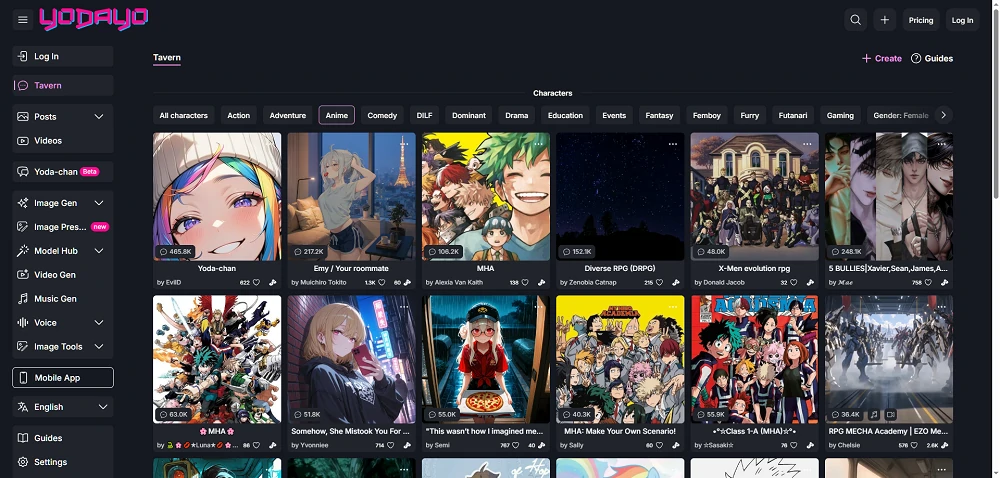
Yodayo is a three-in-one platform: AI anime image generation, character roleplay, and a creator community.
The defining event is the platform's move to all-ages content, which caused significant community backlash. Filtering is also hard to predict from the documentation. That said, its image generation tooling is arguably the best here, with model hubs, LoRA training, and premium roleplay models.
Pros
- Best-in-class anime image generation.
- A strong creator community.
- Premium roleplay models from major labs.
- Deep character backstory tooling.
Cons
- Mature content was removed, which is a drawback if that matters to you.
- Filtering is hard to predict.
- Free models queue, with slow response start times.
Best for: anime roleplay plus image generation and an active community.
18. Emochi
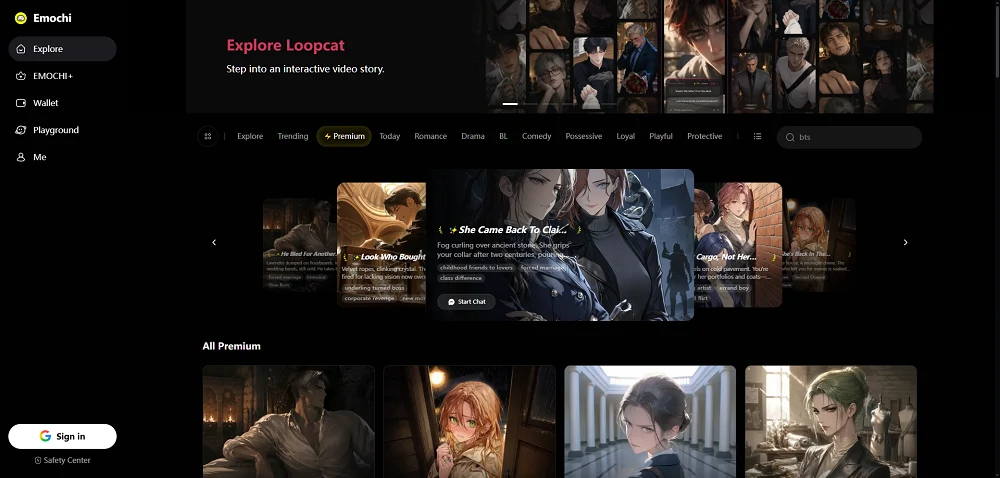
Emochi is an anime, manga, and game character chat app with tens of millions of installs and a million-plus community bots.
A three-week hands-on test scored it 3.2 out of 5 with unusually granular results: the character library earned 4.5 for being enormous and varied, conversation quality 3.8 thanks to swappable premium models, and memory just 2.5, with details decaying after 10–12 exchanges even on the top tier. Voice scored 2.0 for a single flat register across all characters. There is no iOS app.
Pros
- An enormous, varied character library.
- Premium models write well and stay in character, swappable mid-conversation.
- Fair pricing.
Cons
- No iOS app.
- Very short memory even on the top tier.
- A single flat voice register.
- Thin character creation with only three input fields.
- Age verification is a checkbox only.
Best for: Android users who want a huge anime library and accept very short memory.
19. FictionLab
FictionLab is an AI roleplay chat platform focused on building original narrative worlds, including characters, scenarios, locations, and lore. It combines long-form chat with image generation, interactive maps, and JSON/PDF exports. Available on web and Android, it has no iOS app.
Its free tier offers unlimited ad-free messages, 32K context, and 70B-parameter models. Paid tiers provide 131K+ context and models with up to 685B parameters. Slash commands, persistent memory cards, and unrestricted editing and regeneration help users manage long roleplay sessions.
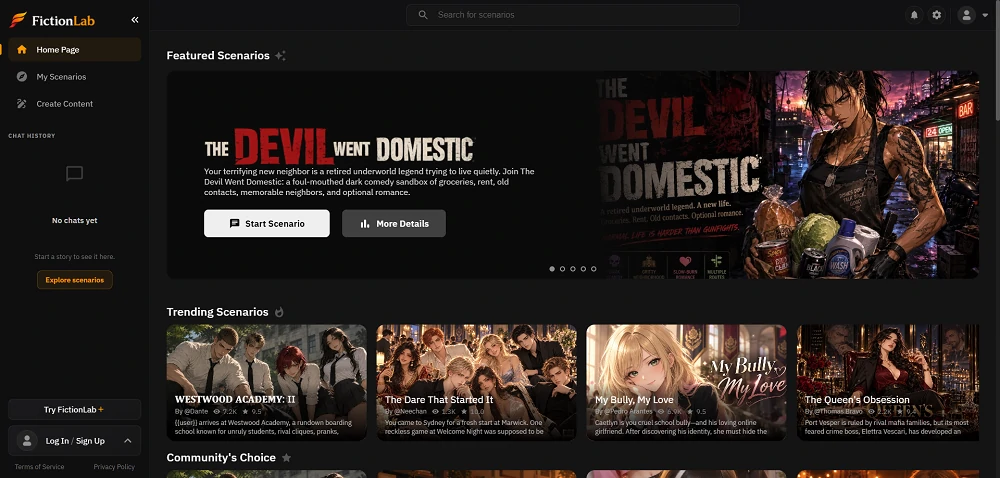
Reviews praise its scene-level writing, tone control, and generous free tier, with some comparisons favoring it over Character.AI for sustained roleplay. However, long-term continuity and big-picture logic remain weak. Bugs, crashes, lag, and unreliable image generation are recurring complaints. Users have also raised concerns about content moderation, while the owner's identity is not publicly disclosed through domain registration.
Pros
- Unlimited ad-free messages on the free tier.
- Extensive worldbuilding tools, including interactive maps and large lore entries.
- Persistent memory cards and detailed roleplay controls.
- Active creator community with writing events and bounties.
Cons
- Frequent bugs, crashes, lag, and unreliable image generation.
- Weak long-term continuity and overall narrative logic.
- AI may override user intent or drift from established character voices.
- Limited transparency about ownership and user-reported content moderation concerns.
- No iOS app.
- Exact subscription pricing is not publicly listed.
Best for: Users who want to build original worlds and prioritize scene quality over long-term narrative consistency.
20. WyvernChat
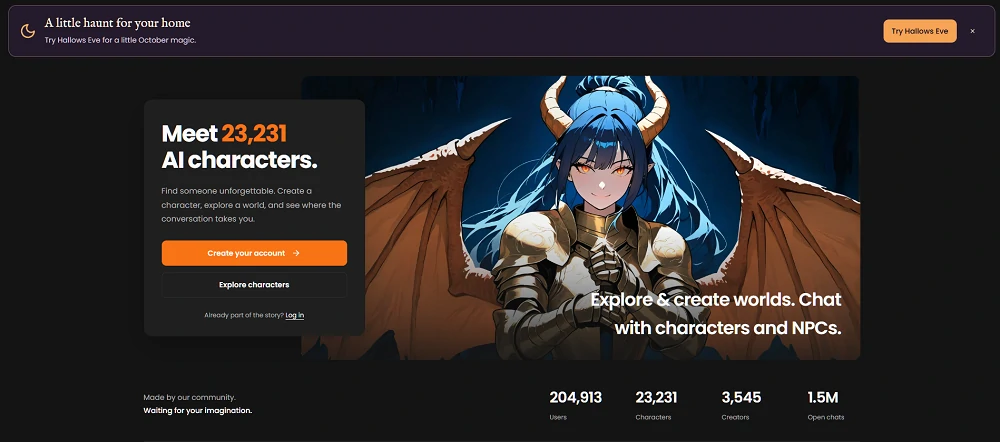
WyvernChat is a browser-based AI roleplay platform offering character and lorebook creation, scripting, group chats, and multi-model access without a local installation. Founded in 2023, it stands out for its mobile-friendly interface and integrated tools for managing long conversations, including chat summaries, Memory Scan, Sidechat, and Lexicon.
The platform offers a free model queue without an API key, support for external providers such as OpenRouter, OpenAI, Gemini, and DeepSeek, and a $25/month Featherless plan for access to 45,000+ open-weight models. Context windows range from 16K on the free tier to 32K on the paid tier. Users can also export characters, chats, and lorebooks to SillyTavern and other platforms.
Users praise its mobile convenience, streamlined workflow, and built-in memory tools. However, it offers less customization than SillyTavern, and free-tier limits can affect long conversations. Other drawbacks include a 15-second cooldown on the free queue, restricted access for UK users since July 2025, occasional bugs, and its ongoing beta status.
Pros
- Free access without an API key.
- Mobile-friendly browser experience.
- Broad model support, including custom and local providers.
- Exportable characters, chats, and lorebooks.
- Integrated memory tools and advanced scripting features.
- Active community and responsive developer.
Cons
- UK access blocked since July 2025.
- 15-second cooldown on the free queue.
- Free-tier context limited to 16K, with a 32K paid cap.
- Memory limitations in long chats.
- Less customization than SillyTavern.
- Smaller character library than major competitors.
- No native iOS or Android app.
- Beta-stage bugs and potentially outdated pricing information.
Best for: Users who want powerful roleplay tools on mobile without installing local software.
Which Character AI Alternative Is Right for You?
- Free all-in-one chat with image and voice: SeaArt AI.
- Free open roleplay with the largest library: Janitor AI. Next best free option: SpicyChat AI.
- Open roleplay that feels less generic: pair Janitor AI with a cheap external model key. Skip the key hassle: SpicyChat AI.
- Fine-grained control over memory and generation: Chub AI at $5/mo.
- Total ownership of the stack, terminal comfort required: SillyTavern.
- Power-user tools on mobile without local install: WyvernChat (skip it if you are in the UK).
- Group scenes with multiple characters: DreamGen for the cleanest setup, Xoul AI for more characters and external model support.
- Novel writing and long-form prose: NovelAI.
- Worldbuilding with deep lore tools: FictionLab AI.
- Auditable memory you can check and correct: Kindroid. Automatic memory with no effort: Nomi AI.
- Companion with voice, video, and presence: Replika (accept stricter moderation and disputed memory).
- Flat pricing with no tokens: Muah AI (weigh the 2024 breach).
- Talking rather than typing: Talkie, or PolyBuzz for anime voice. Widest anime library on Android: Emochi (accept short memory).
Platforms to Avoid for Certain Use Cases
Muah AI unless content flexibility genuinely outweighs a confirmed breach that exposed nearly 2 million accounts, including chat prompts. The data is not a marketing scare.
WyvernChat if you are in the UK. The platform has blocked UK access since July 2025, and there is no clear workaround.
Emochi on iPhone. There is no iOS app, and the Android app has a poor memory rating.
Chai AI if polish matters to you. The app is dated, crashes on some Android 14 builds, and carries a 3.1-star Google Play score.
FictionLab AI if you need long-term continuity or polished from-scratch prose. It is best for scene-level work and worldbuilding, not for projects that need a stable, long-running narrative arc.
How to Choose Without Wasting Money
A few habits will save you more than any ranking.
Decide whether you want a platform or a companion first. Janitor, SillyTavern, Chub, DreamGen, WyvernChat, NovelAI, and FictionLab are platforms where you bring the story. Kindroid, Nomi, and Replika are companions where you build one relationship. Choosing wrong is the most common source of disappointment, and no feature table will catch it for you.
Test memory before you pay. Tell the AI a specific detail, chat 20 to 30 messages, then ask what it remembers. Then plant a false detail, retract it, and see whether the correction sticks. That single test moved one reviewer’s top pick to last and back to first over five months.
Read pricing conflicts as signal, not noise. Where sources disagree sharply, the terms usually changed recently or vary by region. Verify at checkout rather than trusting any published figure, including the ones here.
Watch the entry barrier. SeaArt, Janitor, SpicyChat, and FictionLab all let you start without an API key. SillyTavern, WyvernChat’s free queue, and Janitor with a model key require more setup. Pick the option that matches how much friction you will tolerate.
Honestly, I keep coming back to SeaArt AI for everyday character chat and SillyTavern when I want total control on desktop. The other 18 are worth testing, but they are not where I would start. And one more thing: research into these apps found that overstating post-payment benefits is common across the category, and nearly every site ranking them earns affiliate commissions. Treat any single ranking, including this one, as one map of the terrain rather than a verdict.
Final Words
That's the full picture, and honestly, the right choice depends more on how you want to chat than on which app is "best." SeaArt AI and Janitor AI are where I would start for most people: one for a polished all-in-one experience, the other for a free open roleplay with a huge library. If memory is your priority, Kindroid and Nomi are the only real options. If you want total control, SillyTavern still wins, though the setup is not for everyone.
One last thing: pricing changes constantly. I have seen free tiers shrink, paid tiers grow, and platform policies change between the time I write this and the time you read it. Verify pricing on the platform’s own page before committing, and check the
Character.AI bankruptcy update, if you have not already. Your characters and chats are worth migrating deliberately, not in a panic.
Character AI Alternative for Roleplay - FAQs
Is Character.AI shutting down?
Not yet. Character.AI filed for Chapter 11 bankruptcy in 2026, but the site remains online while the court oversees a possible sale.
Will my Character.AI chats be saved?
That depends on the buyer’s terms. State attorneys general have asked the court to require data deletion protections for children, so at minimum your personal data should be deletable. Actual chat export options are limited. Do not assume a buyer will honor your data the way Character.AI did.
Which alternative is most like Character.AI?
For most people, the closest feel is SeaArt AI, which is a character chat platform with image and voice included, and Replika, which is a long-standing companion app with voice and avatar features. For a closer match on the open roleplay side, Janitor AI has the largest community catalog.
Is there a real Character.AI alternative for long-term companionship?
Yes, but it depends on what you want. Kindroid and Nomi are the strongest dedicated companion apps. Replika is the longest-running, though reviews conflict on its current memory quality. If you want an open conversation with a stable long-term relationship, avoid the anime platforms, which tend to be better for short sessions.
Are these alternatives safe for my data?
It depends on the platform. Larger, longer-running services like Replika, NovelAI, and SillyTavern have clearer privacy policies. Newer or smaller operators like FictionLab and WyvernChat have mixed trust assessments, and at least one source flagged FictionLab’s hidden owner identity. Treat any AI chat as data that leaves your device, avoid sharing passwords or payment details, and check the platform’s privacy policy before sharing personal information.
Can I move my characters between platforms?
Partially. WyvernChat exports cards and lorebooks to SillyTavern format, and SillyTavern can import from several other tools. FictionLab and NovelAI have their own card formats with limited interoperability. Most consumer platforms lock characters into their own ecosystem.
Related Articles

60+ Character AI Ideas for Better Roleplay Conversations

The Best Chub AI Alternatives in 2026: Where to Take Your Roleplay Next
PolyBuzz AI: Everything You Need to Know & Best AI Chat Alternative

12 Apps Like PolyBuzz for Character Chat and AI Companionship

Janitor AI: What It is and How to Use It for AI Chat